 | |
The Edge of the Precipice: The U.S.-Iran Crisis of 2026
By Leon Hadar
The Middle East stands once again at a dangerous crossroads. As American naval forces steam toward the Persian Gulf and Iranian Revolutionary Guard units conduct live-fire exercises in the Strait of Hormuz, the region teeters on the edge of a conflict that could reshape the global order. The current crisis between Washington and Tehran represents potentially the most perilous moment in their relationship since the 1979 revolution.
The immediate trigger for this escalation lies in Iran's brutal suppression of nationwide protests that began on December 28, 2025. The death toll remains contested due to a nationwide internet blackout imposed by Iranian authorities on January 8. Iranian government figures put the toll at 3,117, though Supreme Leader Ali Khamenei acknowledged "several thousand" deaths. Independent sources suggest the actual toll could range from 12,000 to over 30,000. Among the confirmed dead are hundreds of children and more than 200 security personnel.
These protests, sparked by the collapse of Iran's rial currency and economic mismanagement, quickly evolved into a direct challenge to Khamenei's rule. The most deadly period occurred on January 8-9, when security forces opened fire on protesters with live ammunition in what activists described as an organized massacre. The government's response included a comprehensive internet shutdown, confiscation of satellite dishes and security camera footage, and mass arrests exceeding several thousand.
President Trump's response has been characteristically forceful. He has called openly for regime change while deploying what he terms a "massive armada" to the region, led by the USS Abraham Lincoln carrier strike group. This military buildup represents the most significant concentration of American power in the Middle East since strikes on Iranian nuclear facilities in June 2025. Trump has warned that military options remain on the table and could act "with speed and violence, if necessary." He conveyed two key demands to Iranian leaders: "Number one, no nuclear. And number two, stop killing protesters."
Yet beneath the confrontation runs an undercurrent of potential diplomacy that has gained significant momentum. In a major development, both Tehran and Washington have confirmed that direct talks are scheduled for Friday, February 7, in Istanbul, Turkey. US special envoy Steve Witkoff will meet with Iranian Foreign Minister Abbas Araghchi in the most significant diplomatic engagement between the two nations in months. Trump's son-in-law Jared Kushner is also expected to participate. Regional powers including Saudi Arabia, the UAE, Qatar, Egypt, Oman, and Pakistan are expected to attend.
This diplomatic breakthrough came after intensive shuttle diplomacy by Turkey, Egypt, and Qatar. Turkish President Erdogan has offered to serve as facilitator. Iranian officials confirmed that arrangements are progressing, though they insist negotiations must be conducted on "fair and equitable" terms, not "under the shadow of threats." Foreign Minister Araghchi stated Iran is ready for "meaningful, logical and fair" diplomatic processes but warned that "diplomacy is incompatible with pressure, intimidation, and force."
However, significant obstacles remain. Trump's longstanding demands include zero uranium enrichment, limits on Iran's ballistic missile program, and an end to Tehran's support for regional proxy groups. Iran has categorically rejected all three as unacceptable infringements on its sovereignty. Araghchi made clear that Iran's "defensive and missile capabilities" will "never" be the subject of negotiations. Iranian sources suggest Tehran views the ballistic missile issue as an even larger obstacle than uranium enrichment.
On the nuclear question, Iranian officials have indicated some willingness to show flexibility, including potentially shipping over 400 kilograms of highly enriched uranium abroad and accepting a zero-enrichment arrangement under an international consortium. However, Iran insists on maintaining the right to enrich uranium on its own soil and demands that US military forces be moved away from its borders before substantive talks can begin.
The regional dimensions cannot be overstated. Supreme Leader Khamenei has warned that any American attack would trigger a "regional war," a threat that carries credible weight given Iran's network of proxy forces across Iraq, Syria, Lebanon, and Yemen. Iraqi militia leader Ahmad al-Hamidawi warned that "the war on the (Islamic) Republic will not be a picnic," while Yemen's Houthi rebels have signaled readiness to resume Red Sea shipping attacks. Lebanese Hezbollah has indicated it is preparing for "possible aggression."
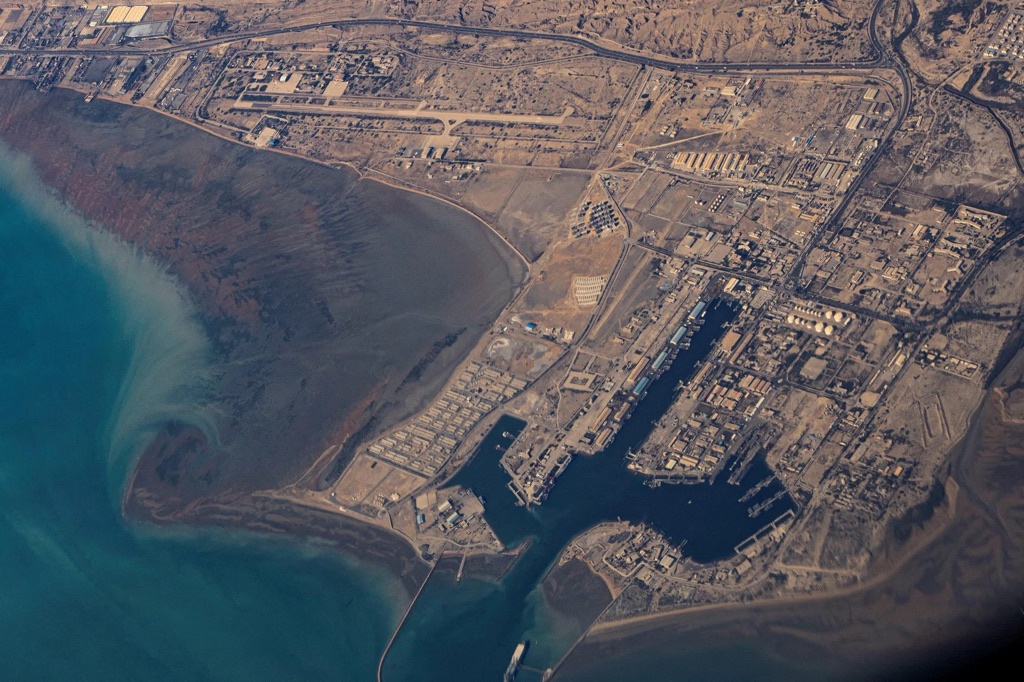
The Strait of Hormuz, through which roughly 20 percent of global oil supply passes, has become a flashpoint. US Central Command has warned Iran that "any unsafe and unprofessional behavior near US forces, regional partners or commercial vessels increases risks of collision, escalation, and destabilization."
Recognizing these dangers, regional powers have launched intensive diplomatic efforts. Significantly, both Saudi Arabia and the UAE have publicly stated they will not allow their territory or airspace to be used for potential strikes against Iran, signaling their opposition to military action.
What makes this crisis particularly dangerous is its unpredictability and the intersection of internal and external pressures on Iran's leadership. Recent reports suggest that Iran's leadership is increasingly worried that a US military strike could drive an already enraged public back onto the streets and threaten the Islamic Republic's survival. In private high-level meetings, officials reportedly warned Khamenei that public anger has reached a point where fear is no longer a deterrent, and that external pressure combined with renewed demonstrations could lead to the ruling establishment's collapse.
Meanwhile, Trump's transactional approach and emphasis on maximum pressure create uncertainty about American intentions. The administration's deployment of overwhelming military force while simultaneously pursuing negotiations reflects the "madman theory" approach projecting unpredictability to extract concessions.
The stakes extend far beyond the bilateral relationship. A military conflict would likely spike global energy prices, disrupt international shipping, draw in regional powers, and potentially trigger wider instability across the Middle East. The humanitarian costs would be catastrophic. Iran's weakened regional position following Israeli attacks on Hamas, Hezbollah, and the Houthis, as well as the fall of Syrian ally Bashar al-Assad may make Tehran more willing to negotiate, but could also make the regime more desperate and unpredictable.
As February 2026 continues, the international community watches with anxiety and cautious optimism. The scheduled Istanbul talks represent the most promising diplomatic opening in months, but enormous gaps remain between Washington and Tehran. The next few days will test whether diplomacy can prevail over the momentum toward military confrontation.
The willingness of regional powers to facilitate dialogue offers a pathway forward, but only if both sides prioritize stability over scoring political points. The presence of multiple Arab states at the Istanbul meeting suggests a regional determination to prevent war, but success will require both sides to make difficult compromises on core demands they have insisted are non-negotiable.
With talks scheduled and diplomatic channels finally open after weeks of military brinkmanship, there is reason for hope. Yet the massive military buildup continues, the death toll remains a source of international outrage, and fundamental disagreements persist. The world can only hope that the Istanbul talks mark the beginning of genuine de-escalation, and that wisdom and restraint triumph over the dangerous logic of escalation that has brought us to this precipice.